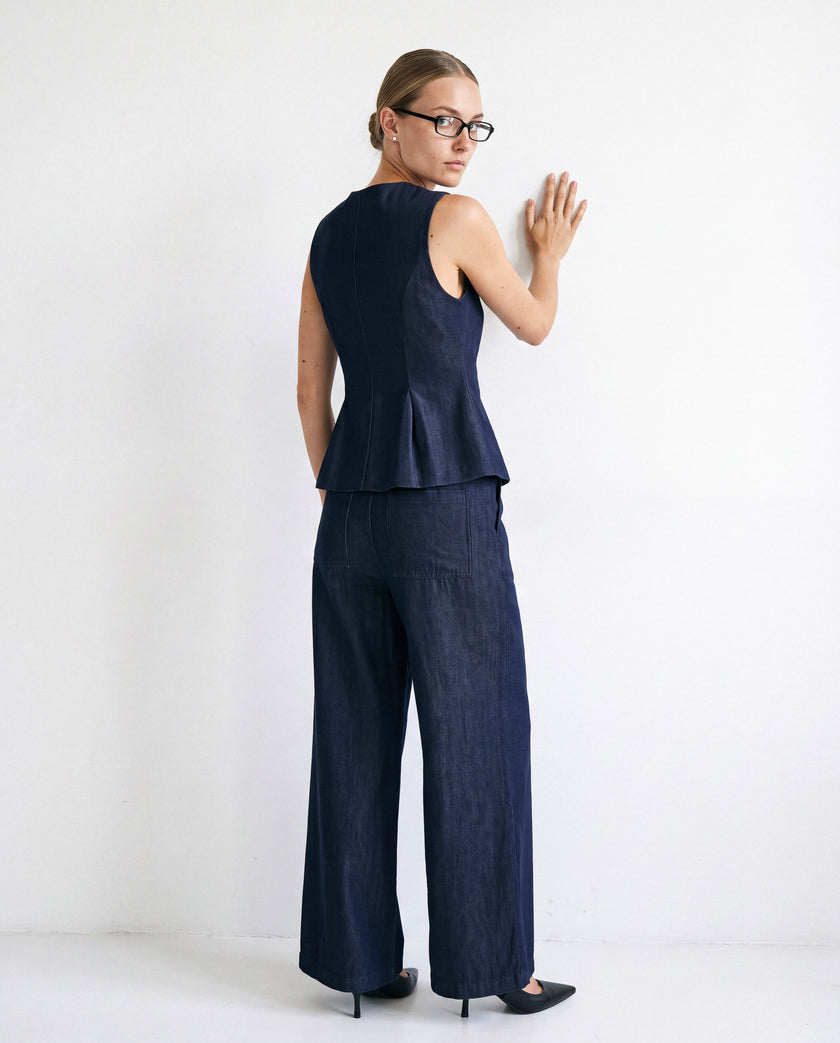

Sizes are not the same from brand to brand, and sometimes not even from piece to piece. That is why every product page has its own chart, measured on the garment itself. Here is how to use it in five minutes.
1. Start with something you already own
Take a similar piece that fits you well: a blazer for a blazer, a shirt for a shirt. Lay it flat on a table, buttoned, and smooth it out. You are measuring the garment, not your body.
2. Measure the three numbers that matter
- Chest: straight across, just under the armholes, then double it.
- Shoulder: from one shoulder seam to the other.
- Length: from the highest point of the shoulder down to the hem.
For trousers and dresses, add the waist (straight across, doubled) and the hip.
3. Compare with the chart on the product page
Open Size & fit on the product page. The chart shows centimetres or inches, with a switch to change between them. Pick the size whose chest and shoulder are closest to your own piece. Within a centimetre or two is a good match.
4. Read the fit note
On most pieces you will find a short fit note under the sizes, for example "Cut with room to layer" or "Take your usual size". It tells you how the piece is meant to sit, which numbers alone do not.
5. Between two sizes?
- Blazers and jackets: go by the shoulder. If you layer knits underneath, take the larger size.
- Shirts and tops: go by the chest.
- Dresses and trousers: go by the waist.
Still not sure? Write to contact@mantelandmoss.com with the piece and your measurements and we will tell you what we would choose. And if it is not right, you have 14 days to return it. See Returns.